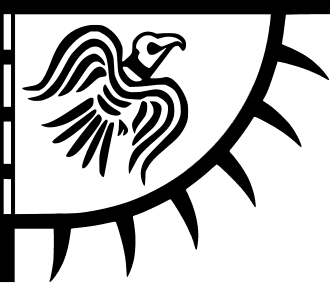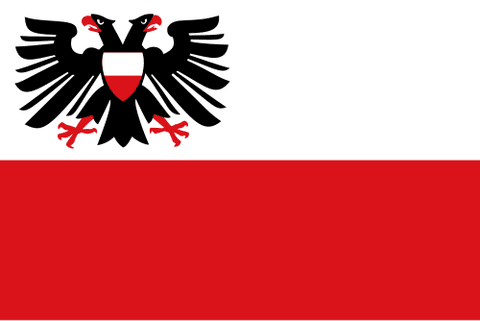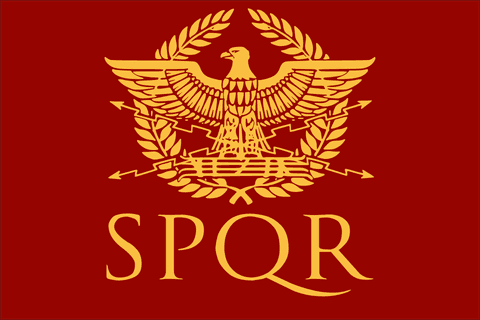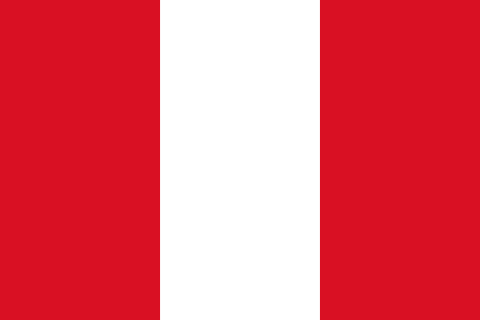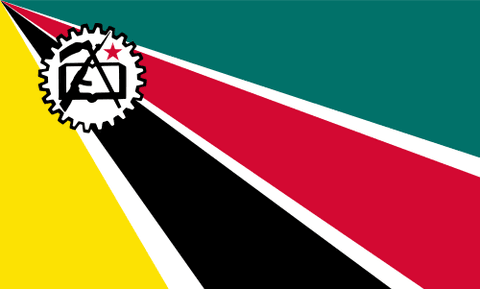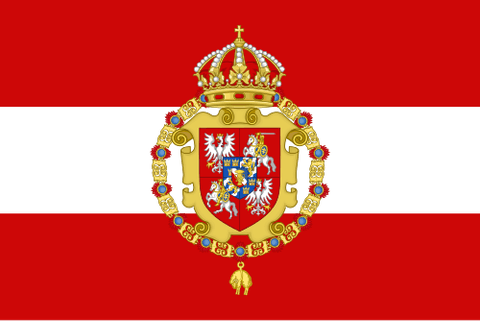
Flag of Polish-Lithuanian Commonwealth

Register of countries · No. 229 of 320

Polish-Lithuanian Commonwealth

Profile
Historical regime
Government
Noble republic with an elected king
Period
1569–1795
Era
Early modern era
Predominant spectrum
Right
Strongest axis
Traditionalist 90%

A union of Poland and Lithuania from 1569 to 1795, the Polish-Lithuanian Commonwealth was a noble republic with an elected king, a Sejm and the liberum veto, unusual religious tolerance and a vast multiethnic territory, until partitioned by Russia, Prussia and Austria.

In this catalog, Polish-Lithuanian Commonwealth leans most strongly toward Traditionalist 90%. These scores describe a recorded government profile, not the views of every resident.
How close are you to Polish-Lithuanian Commonwealth?

Your latest completed test can be compared with this profile. See your overall match and the three axes where you differ most.

Flag of Polish-Lithuanian CommonwealthYour closeness to Polish-Lithuanian Commonwealth—

Take the test to see your match.

The twelve axes

Where Polish-Lithuanian Commonwealth sits across twelve axes, organized into four categories. Each note explains what the axis measures.

Government

  • Federal 78%Unitary

    Federal leaning. Regional autonomy and the concentration of national authority.

  • Democracy 82%Autocracy

    Democracy leaning. Public participation and the concentration of political leadership.

  • SecurityLiberty 60%

    Liberty leaning. The balance between public order and individual liberty.

Diplomacy

  • Non-interventionist 55%Nationalist

    Non-interventionist leaning. Foreign intervention and the pursuit of national interests.

  • MilitaristPacifist 53%

    Pacifist leaning. The role of military force and peaceful cooperation.

  • AssimilationMulticulturalism 69%

    Multiculturalism leaning. Cultural assimilation and the accommodation of diversity.

Economy

  • PublicPrivate 78%

    Private leaning. Public ownership and private enterprise.

  • PlanningFree market 76%

    Free market leaning. Economic planning and market coordination.

  • ProtectionismGlobalism 76%

    Globalism leaning. Domestic protection and international trade.

Society

  • IrreligiousReligious 78%

    Religious leaning. The role of religion in public life.

  • ProgressiveTraditionalist 90%

    Traditionalist leaning. Social change and inherited traditions.

  • TechnologyBiology 68%

    Biology leaning. Technological change and the preservation of human nature.

What stands out

Compared with the median of all 320 countries and regimes in the catalog.

Most distinctive axis

Federal – Unitary

Polish-Lithuanian Commonwealth: Federal 78%. The catalog median is Unitary 73%.

Most ordinary axis

Militarist – Pacifist

Polish-Lithuanian Commonwealth: Pacifist 53%. The catalog median is Militarist 53%.

Who is closest in the register

Similar countries and regimes

Matches use the same twelve-axis compatibility calculation as the test.

Sources and flag credit

Flag reference: Wikimedia Commons.

Descriptions and scores come from this project’s country catalog.

About these positions

These scores are reference estimates for comparison, not an endorsement or a measure of quality of life. A match describes similarity between recorded scores. Read about the method or suggest a correction.

Keep exploring