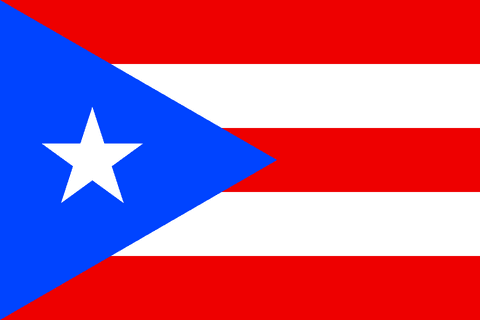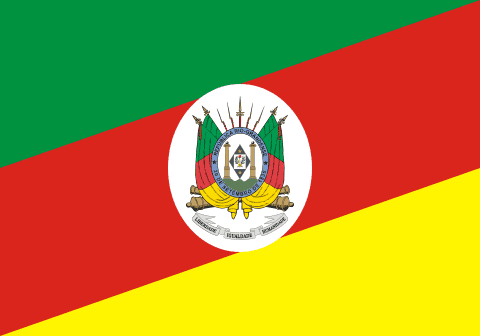
Flag of Rio Grande do Sul (Brazil)

Register of countries · No. 246 of 320

Rio Grande do Sul (Brazil)

Profile
Modern country or territory
Government
Ranching-agribusiness region
Predominant spectrum
Center
Strongest axis
Democracy 78%

Brazil's southernmost state, Rio Grande do Sul has a strong regional identity and a tradition of polarized political disputes, with an economy built on agribusiness, ranching, and industry.

In this catalog, Rio Grande do Sul (Brazil) leans most strongly toward Democracy 78%. These scores describe a recorded government profile, not the views of every resident.


How close are you to Rio Grande do Sul (Brazil)?

Your latest completed test can be compared with this profile. See your overall match and the three axes where you differ most.

Flag of Rio Grande do Sul (Brazil)Your closeness to Rio Grande do Sul (Brazil)—

Take the test to see your match.

The twelve axes

Where Rio Grande do Sul (Brazil) sits across twelve axes, organized into four categories. Each note explains what the axis measures.

Government

  • Federal 68%Unitary

    Federal leaning. Regional autonomy and the concentration of national authority.

  • Democracy 78%Autocracy

    Democracy leaning. Public participation and the concentration of political leadership.

  • SecurityLiberty 60%

    Liberty leaning. The balance between public order and individual liberty.

Diplomacy

  • Non-interventionist 59%Nationalist

    Non-interventionist leaning. Foreign intervention and the pursuit of national interests.

  • MilitaristPacifist 68%

    Pacifist leaning. The role of military force and peaceful cooperation.

  • AssimilationMulticulturalism 63%

    Multiculturalism leaning. Cultural assimilation and the accommodation of diversity.

Economy

  • Public 51%Private

    Public leaning. Public ownership and private enterprise.

  • PlanningFree market 56%

    Free market leaning. Economic planning and market coordination.

  • ProtectionismGlobalism 66%

    Globalism leaning. Domestic protection and international trade.

Society

  • Irreligious 53%Religious

    Irreligious leaning. The role of religion in public life.

  • Progressive 63%Traditionalist

    Progressive leaning. Social change and inherited traditions.

  • Technology 64%Biology

    Technology leaning. Technological change and the preservation of human nature.

What stands out

Compared with the median of all 320 countries and regimes in the catalog.

Most distinctive axis

Federal – Unitary

Rio Grande do Sul (Brazil): Federal 68%. The catalog median is Unitary 73%.

Most ordinary axis

Public – Private

Rio Grande do Sul (Brazil): Public 51%. The catalog median is Public 51%.

Who is closest in the register

Similar countries and regimes

Matches use the same twelve-axis compatibility calculation as the test.

Sources and flag credit

Flag reference: Wikimedia Commons.

Descriptions and scores come from this project’s country catalog.

About these positions

These scores are reference estimates for comparison, not an endorsement or a measure of quality of life. A match describes similarity between recorded scores. Read about the method or suggest a correction.

Keep exploring